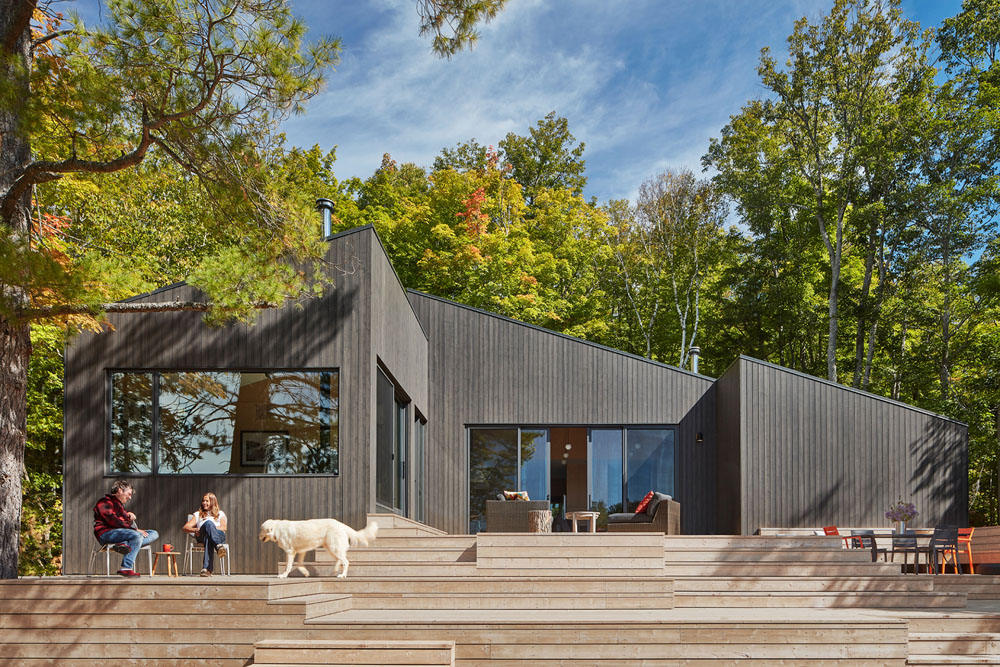
Designed for an extended family of three generations, this one-storey cottage is located on a peninsula with panoramic views over Lake Catchacoma. The cottage is defined by its three volumes that coexist within a mature forest where a previous structure once stood. The design takes cues from the sloping topography, seamlessly integrating the cottage into its surroundings and fostering a deep connection to the landscape.
The three volumes function as discrete wings, unified beneath a single roof with steeply sloped rooflines. A central gathering space features living and dining areas with soaring ceilings, a kitchen, and a loft space above. Family and guest bedrooms are clustered into their respective wings, flanking the central volume. The cottage includes 6 bedrooms, 2 bathrooms, and a family room within a footprint of 205 square meters, emphasizing sociability and shared experiences of cottage life.
The rooflines articulate the three volumes, each at different floor heights following the natural grade of the site, connected by a central core that opens up views between them. Clerestory windows at varying heights direct light and natural ventilation into lofted spaces and the living area below. The design reduces visual and physical boundaries between indoors and outdoors to strengthen the connection to nature. Every axis offers views and access to the exterior. A large sliding glass door frames the lake, while circulation paths are oriented toward windows that visually link the interior to the surrounding landscape.
The exterior cladding is grey-stained wood, allowing the cottage to blend into its landscape with a textured natural finish that complements the surrounding dark tree trunks. The entry porch, lined with warm red cedar, appears sculpted from the central volume, drawing attention to the main entrance. An expansive deck stretches along the lakeside for family gatherings or quiet outdoor relaxation, cascading in multiple tiers towards the water’s edge to provide space for various outdoor activities.
The cottage integrates passive and active strategies to reduce environmental impact. Zoned HVAC allows parts of the cottage to shut down in winter, while vaulted ceilings and operable windows enhance passive ventilation and daylighting. Sustainable features include high-performance glazing, low-flow fixtures, energy-efficient systems, a heat-recovery ventilator, and FSC-certified wood, all within a well-insulated, airtight envelope that exceeds code.
Category:Vacation HomesYear:2024Location:Washington, DC., USAArchitects:Dubbeldam Architecture + DesignDesign Team: Scott Sampson, Kelsey Wilkinson, Gigi Presentey, and Heather DubbeldamGeneral Contractor:Ortolan Building Design Ltd.Client: PrivatePhotographer: Riley Snelling